What is a Pharmaceutical Intermediate and Its Importance?
Pharmaceutical intermediates play a crucial role in the production of active pharmaceutical ingredients (APIs). As defined by Dr. Emily Reynolds, a leading expert in the pharmaceutical industry, “Pharmaceutical intermediates are the backbone of drug manufacturing.” Her insights highlight their significance in drug formulation and development processes.
In the pharmaceutical field, intermediates facilitate the transformation of raw materials into complex compounds. Many times, these are the essential building blocks for APIs. Each step in this chemical journey requires precision. Mistakes can lead to ineffective medications. Therefore, the quality of pharmaceutical intermediates cannot be overlooked.
However, the industry faces challenges. There is a constant need for new intermediates due to evolving drug formulations. The reliance on these substances can lead to potential supply chain issues. It poses risks for drug manufacturers and patients alike. As the market grows, the importance of understanding pharmaceutical intermediates deepens, making it vital for professionals to continue exploring this area.

What is a Pharmaceutical Intermediate?
A pharmaceutical intermediate is a vital building block in drug manufacturing. These compounds are produced during the synthesis of active pharmaceutical ingredients (APIs). They are not the final product but play a crucial role in the process. Understanding their function is essential for anyone in the pharmaceutical field.
Pharmaceutical intermediates can vary in complexity. Some may consist of simple chemical structures, while others are intricate and require precise handling. Each intermediate must be carefully controlled throughout its production. Quality assurance is critical. If an intermediate is contaminated or poorly synthesized, the entire batch may be compromised.
This aspect highlights the importance of skilled professionals in the industry. Their expertise ensures that the intermediates meet stringent quality standards. However, the production process can be challenging. Variability in raw materials and environmental factors can affect outcomes. Continuous improvement and innovation are necessary in this field. Evaluating processes regularly can lead to better efficiency and quality.
The Role of Pharmaceutical Intermediates in Drug Development
Pharmaceutical intermediates play a crucial role in drug development. These compounds bridge the gap between raw materials and finished pharmaceuticals. They are essential in the synthesis of active pharmaceutical ingredients (APIs). According to a report by MarketsandMarkets, the pharmaceutical intermediates market is projected to reach $20 billion by 2026, growing at a CAGR of 6.5%. This growth underscores their importance in the pharmaceutical industry.
The development of intermediates can be complex. The synthesis often requires innovative techniques and adherence to strict quality standards. For instance, the FDA reported that 80% of drug failures occur due to issues with API quality. Such statistics highlight the necessity for reliable intermediates. Inconsistent quality can lead to significant delays in drug approval. Moreover, the variation in synthesis methods can impact the overall efficacy of pharmaceuticals.
Collaboration among manufacturers, researchers, and regulatory bodies is vital. Such partnerships facilitate the development of efficient synthetic routes. A study from the Pharmaceutical Research and Manufacturers of America (PhRMA) indicated that streamlined processes can reduce production costs by up to 30%. However, ongoing challenges exist in optimizing these processes while maintaining high standards of safety and effectiveness. Balancing innovation with compliance remains a critical focus for the industry.
Types of Pharmaceutical Intermediates in the Industry
Pharmaceutical intermediates are essential compounds in drug manufacturing. They act as building blocks for active pharmaceutical ingredients (APIs). Understanding the types of intermediates is crucial for manufacturers and researchers.
There are several key categories of pharmaceutical intermediates. Primary intermediates are compounds directly involved in producing APIs. These are often simple molecules. They form the backbone of many drugs. Secondary intermediates play a different role. They help refine the production process. Their complexity can vary greatly, impacting the efficiency of drug synthesis.
Another significant category is ancillary intermediates. These compounds support the main active ingredients. They improve stability or enhance bioavailability. The industry continuously seeks new intermediates to increase efficiency. However, the search can be challenging. New intermediates may introduce unexpected issues in production. This necessitates a careful evaluation to avoid pitfalls. Balancing innovation with reliability is a key concern for pharmaceutical companies.
Types of Pharmaceutical Intermediates in the Industry
The Importance of Quality Control in Pharmaceutical Intermediates
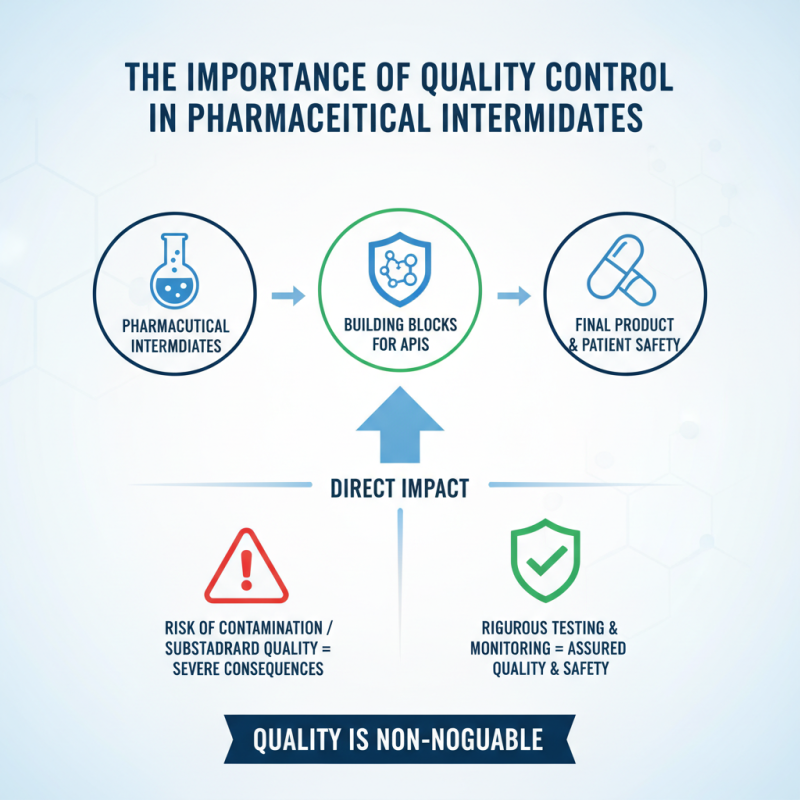
Quality control in pharmaceutical intermediates is vital. These substances serve as building blocks for active pharmaceutical ingredients. Their quality directly impacts the final product and patient safety. If intermediates are contaminated or substandard, the consequences can be severe. Therefore, rigorous testing and monitoring are essential.
The process includes various tests. Chemical composition, purity, and stability are checked. Laboratories must adhere to strict guidelines. Any deviation from quality standards can lead to significant implications. Contaminated intermediates can cause ineffective treatments or adverse reactions. This highlights the need for reliable testing methods.
Quality assurance should not be seen as a checkbox task. It's an ongoing commitment. Regular audits and updates to testing protocols are necessary. New challenges may arise, requiring innovative solutions. Collaboration among scientists, manufacturers, and regulatory bodies is crucial. The goal is to ensure that every batch of intermediates meets the highest standards before reaching the market.
Future Trends in Pharmaceutical Intermediates and Their Impact
The landscape of pharmaceutical intermediates is evolving rapidly. As the global demand for complex drugs increases, intermediates play a crucial role in streamlining production. They serve as building blocks in the synthesis of active pharmaceutical ingredients (APIs). This creates opportunities for innovation and efficiency in manufacturing.
Future trends indicate a stronger emphasis on sustainability. Pharmaceutical companies are exploring green chemistry approaches. This shift aims to reduce environmental impacts while maintaining product quality. Additionally, the integration of artificial intelligence in process optimization is gaining traction. AI can predict process outcomes and enhance yields, which is vital for cost-effective production.
There are also concerns regarding supply chain vulnerabilities. Many regions rely heavily on a few countries for essential intermediates. This risk highlights the importance of diversification in sourcing. Companies must invest in establishing resilient supply chains. Overall, the future of pharmaceutical intermediates holds promise but requires proactive strategies to address emerging challenges.
What is a Pharmaceutical Intermediate and Its Importance? - Future Trends in Pharmaceutical Intermediates and Their Impact
| Category |
Definition |
Importance |
Future Trends |
| Synthetic Intermediates |
Chemical compounds used in the synthesis of active pharmaceutical ingredients (APIs). |
Essential for the production of various APIs; affect quality and yield. |
Increased automation and advanced synthesis techniques. |
| Biological Intermediates |
Intermediates derived from biological sources for drug formulation. |
Critical for the development of biologics and biosimilars. |
Growing emphasis on biologics and personalized medicine. |
| Chiral Intermediates |
Compounds with non-superimposable mirror images, crucial for enantiomerically pure drugs. |
Influence the efficacy and safety of drug formulations. |
Enhanced strategies for chiral synthesis and separation processes. |
| Regulatory Intermediates |
Intermediates that comply with regulatory standards for safety and efficacy. |
Ensure compliance with international health regulations. |
Stricter regulations are driving innovation in compliance technology. |